Biological dentistry · BDS
Cavitations (FDOJ) in Benidorm
We assess altered areas of jawbone with 3D imaging and explain when treatment may be appropriate.
- 3D bone assessment
- Individual evaluation
- Bone healing follow-up
About the treatment
Understand the finding before treatment
A cavitation can go unnoticed for years.
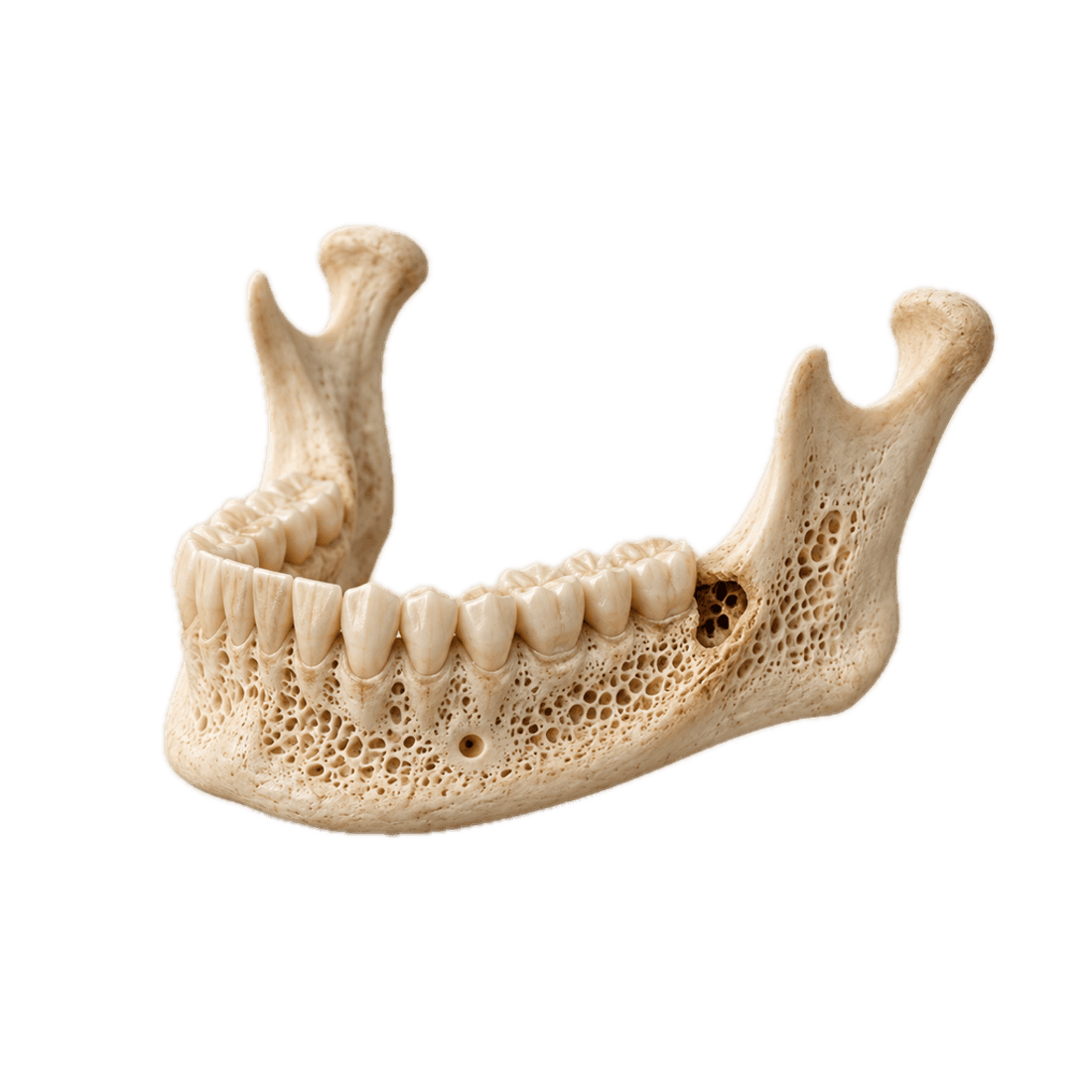
FDOJ describes areas of jawbone containing fatty and necrotic tissue where healing has been incomplete. CBCT helps assess their extent and plan treatment when indicated.
The relationship with systemic symptoms remains under investigation. There are no controlled clinical trials demonstrating improvement in these symptoms after treatment; an incidental finding does not automatically require surgery.
What it can offer
When treatment makes sense
- 01
Remove necrotic tissue
When indicated, surgery aims to remove documented altered tissue.
- 02
Possible local pain relief
Treatment may help with associated neuralgia, although individual responses vary.
- 03
Support bone regeneration
PRF from your own blood is used to support healing of the treated bone.
Your care
How it works
- 1
Surgical cleaning
When appropriate, curettage removes fatty and necrotic tissue.
- 2
Ozone therapy
Ozone is used to support local disinfection.
- 3
PRF application
Platelet-rich fibrin supports the healing process.
- 4
Follow-up
We monitor bone regeneration and your clinical progress.
Who looks after you
The team by your side
Dr Sanjana Dhiman
Clinical director
Dr Pedro Manzano
Biological dentist
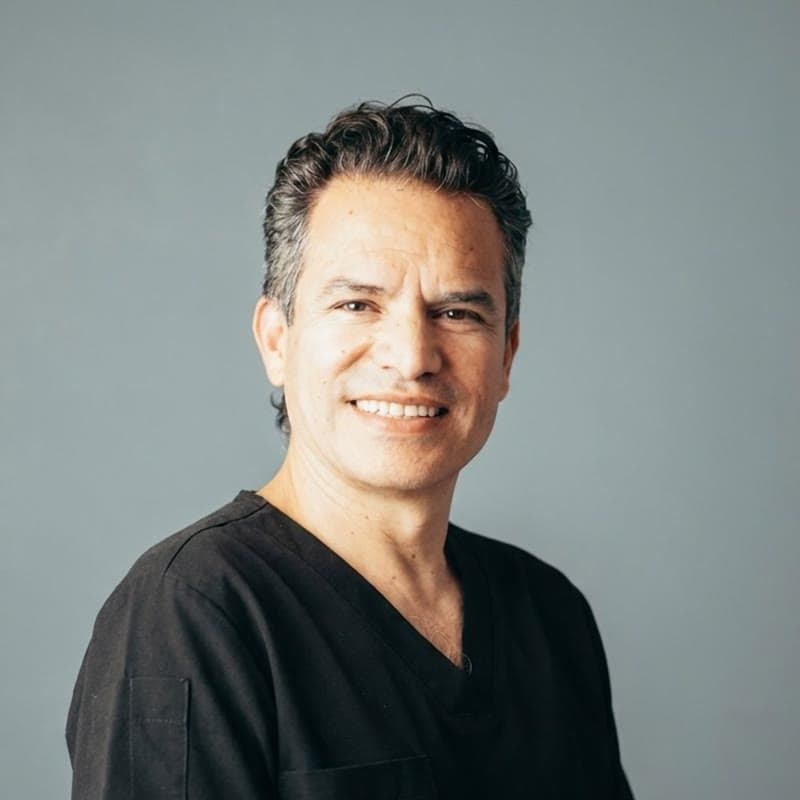
Dr Ricardo Prado
Biological dentist
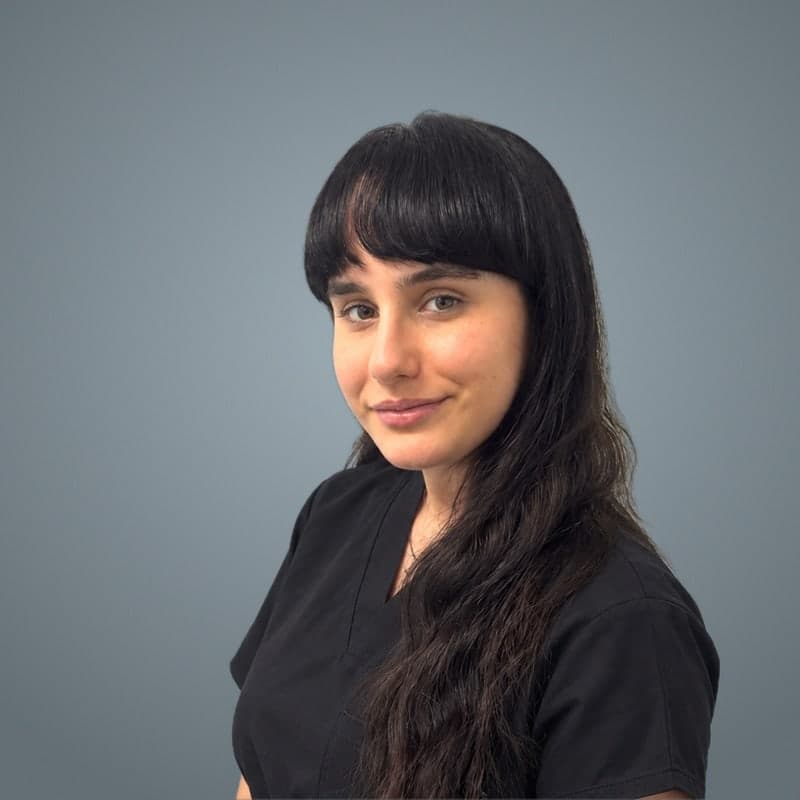
Dr Brenda Martínez
Biological dentist
Frequently asked questions
Do I need treatment if I have no symptoms?
Not necessarily. Symptoms, risks and benefits are assessed; many cavitations are incidental findings that can be monitored.
How do I know if I have a cavitation?
CBCT can help assess it. For fatigue or other general symptoms, we recommend ruling out other causes with your doctor first.
Is surgery painful?
It is performed under local anaesthesia using a minimally invasive approach. Postoperative discomfort is usually manageable.
How long does bone regeneration take?
It can take several months, depending on the extent of the lesion and the individual. Follow-up allows us to assess progress.
Biological dentistry · BDS
Book an assessment
Get an individual assessment and a clear explanation of your options and their limitations.
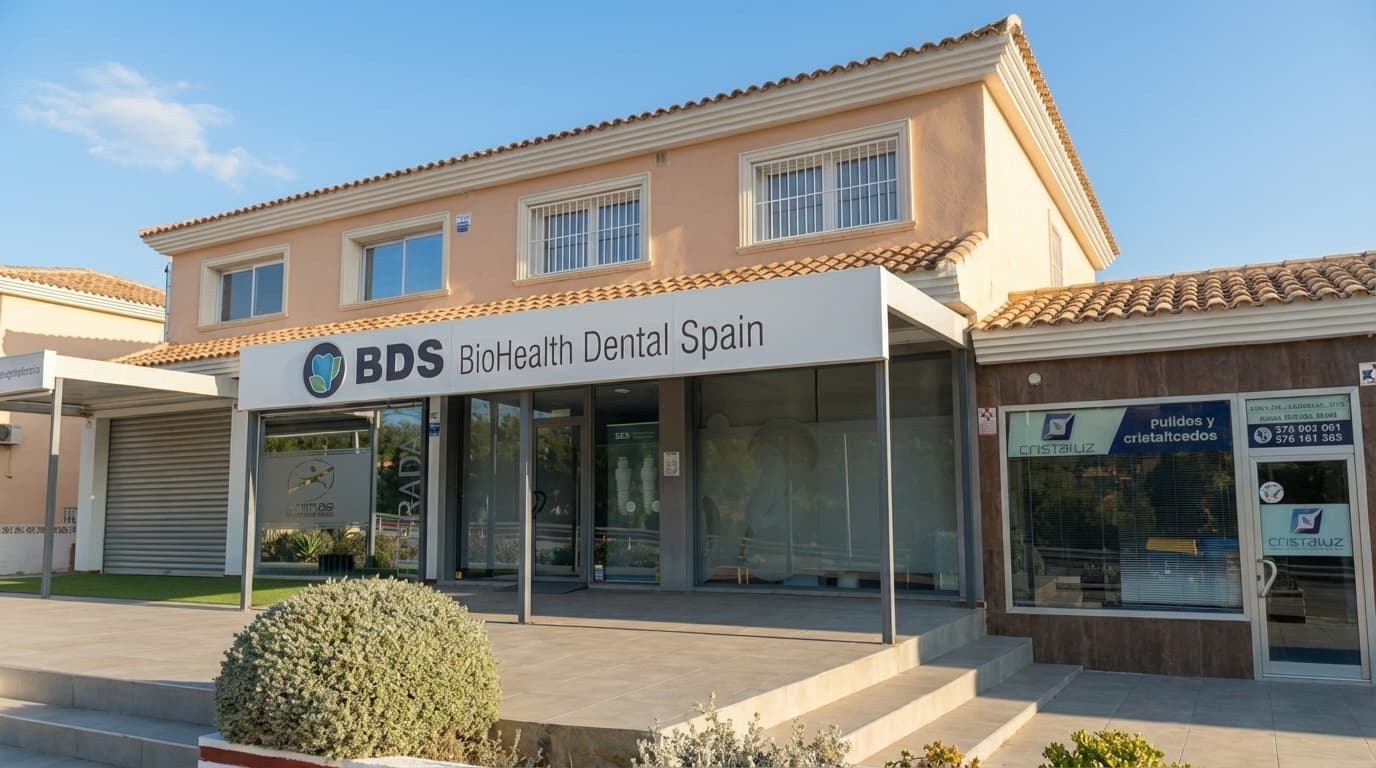
- Address
- CV-70 Ctra. La Nucía – Benidorm, CC Urbania, Local 14
03502 Benidorm, Alicante
Get directions → - Opening hours
- Monday and Thursday · 9:30–17:00
Tuesday and Wednesday · 9:30–19:30
Friday · 9:30–15:00